
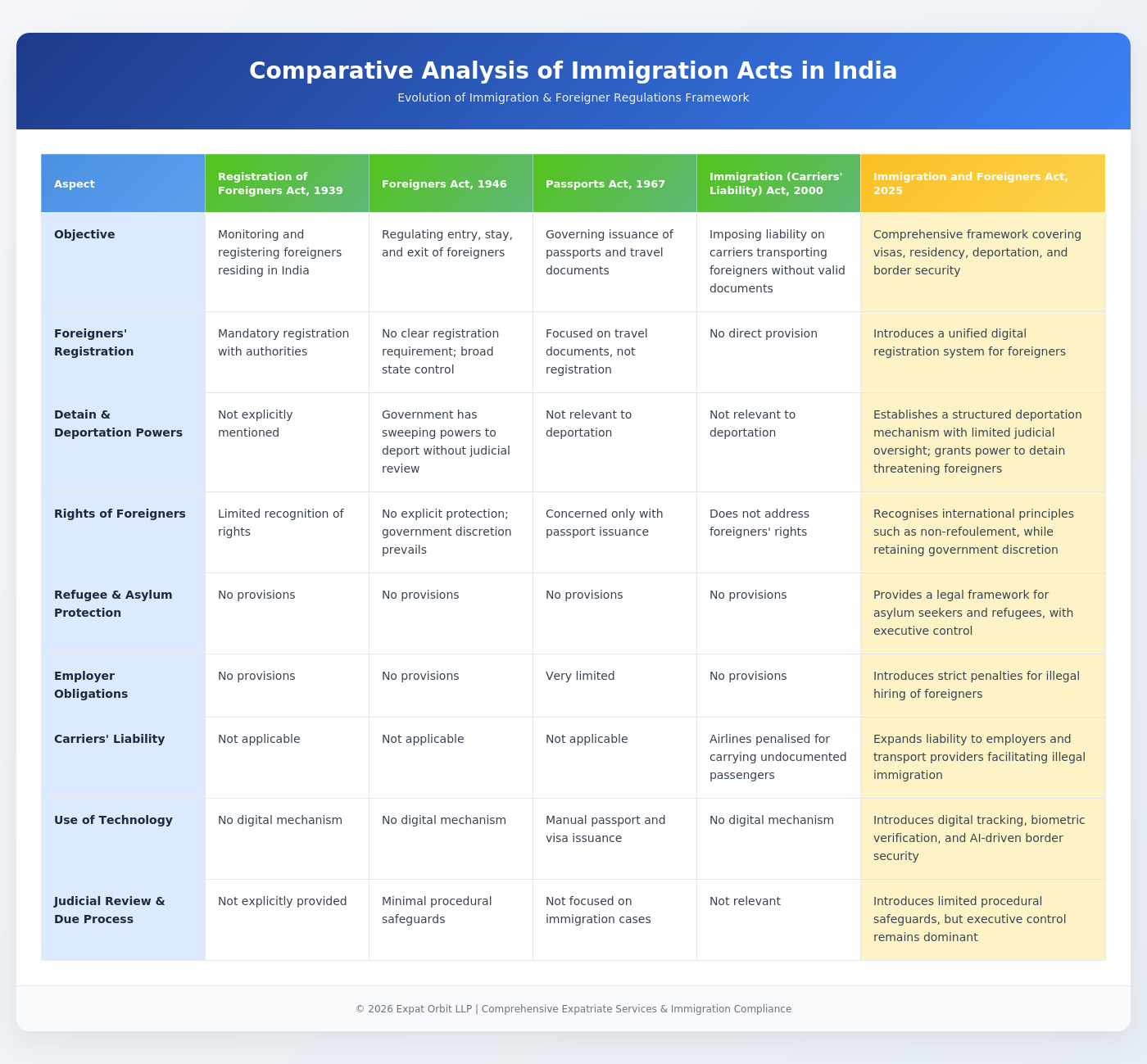
| Old System | New System (2025) |
|---|---|
| Paper Forms - Manual completion of physical arrival and departure cards | e-Arrival Card - Digital submission before arrival with contactless clearance |
| Manual Checks - Person-dependent verification with limited system integration | Biometric Integration - Automated identity verification using facial recognition |
| Multiple Outdated Laws - Represented under various fragmented regulations | Integrated Digital Database - Centralised system connecting all immigration touchpoints |
| Online Portal - FRRO services were primarily handled through an online portal only | Integrated Mobile App - FRRO services are now available through both the online portal and the integrated mobile application. |
| Fragmented Reporting - Disconnected systems across ministries and departments | Unified Immigration Act, 2025 - Single comprehensive law replacing colonial-era statutes |
One of the most significant changes under the Act 2025 is the move to a technology driven, centralised immigration system. Replacing scattered databases and manual checks, India now uses a unified platform linking immigration counters, FRRO offices, carriers, and authorised institutions. It combines real time data from airlines, accommodation providers, universities, and hospitals, enabling faster verification, stronger security, and smoother processing. With biometrics, digital submissions, and automated alerts, authorities can track entries, exits, and compliance more accurately.
The Immigration and Foreigners Act, 2025 places strong emphasis on valid documentation and digital compliance, while keeping entry requirements familiar for foreign nationals. Passports and visas remain mandatory, but the way information is submitted, verified, and tracked has become far more structured and technology driven. The focus is on faster processing, better security, and clearer accountability for travellers and institutions alike.
What foreign nationals and institutions need to know

How this differs from the earlier system
The old system had no e-arrival card, digital accommodation verification, or integrated biometric database. Now, mandatory online arrival and exit Form C updates and biometrics ensure standardised reporting nationwide. Fixed timelines and clear penalties create accountability for foreigners and institutions. This delivers time savings, no queues, and faster processing at immigration counters. Real-time compliance tracking and enhanced security through verifiable audit trails benefit everyone.

The Immigration and Foreigners Act, 2025 streamlines entry and stay in India through mandatory e Arrival Cards and expanded use of the Su Swagatam app. Foreign nationals now have clearer compliance responsibilities. Where FRRO registration is required, it must be completed soon after arrival, and personal, address, employment or university details must be kept accurate and updated. Although processes are still in line with the earlier procedures, they made simpler, enforcement is stricter, and errors or omissions may result in delays, penalties, or cancellation of stay.
The Act also strengthens border security through enhanced digital screening, biometric verification, and real time data sharing from airlines, accommodation providers, and connected institutions. Automated checks reduce the risk of illegal or undocumented entry by validating each traveller through linked digital records.
The upgraded Fast Track Trusted Travellers Programme (FTI TTP) offers quicker clearance for genuine, pre verified travellers. Automated e gates, advance background checks, and pre cleared profiles significantly reduce wait times while maintaining strong identity verification, benefiting frequent travellers, business visitors, and eligible tourists.
Form C compliance is now significantly stricter for all accommodation providers like hotels, guesthouses, homestays, PGs, hostels, landlords, and service apartments. Hosts must submit Form C within 24 hours of a foreign national’s arrival. If the guest temporarily leaves for a domestic trip or returns to the same property, the keeper of accommodation must update Form C again with the revised stay details.
Earlier laws (especially the repealed Registration of Foreigners Act, 1939 ) did not require mandatory exit reporting, and tracking depended mainly on manual arrival entries. The new regulations mandates that accommodation providers must file a Form C Exit Update when the foreigner checks out or departs India. This ensures complete end-to-end tracking of each foreigner’s entry, stay, movement, and exit within the Bureau of Immigration’s digital system something missing in earlier laws.
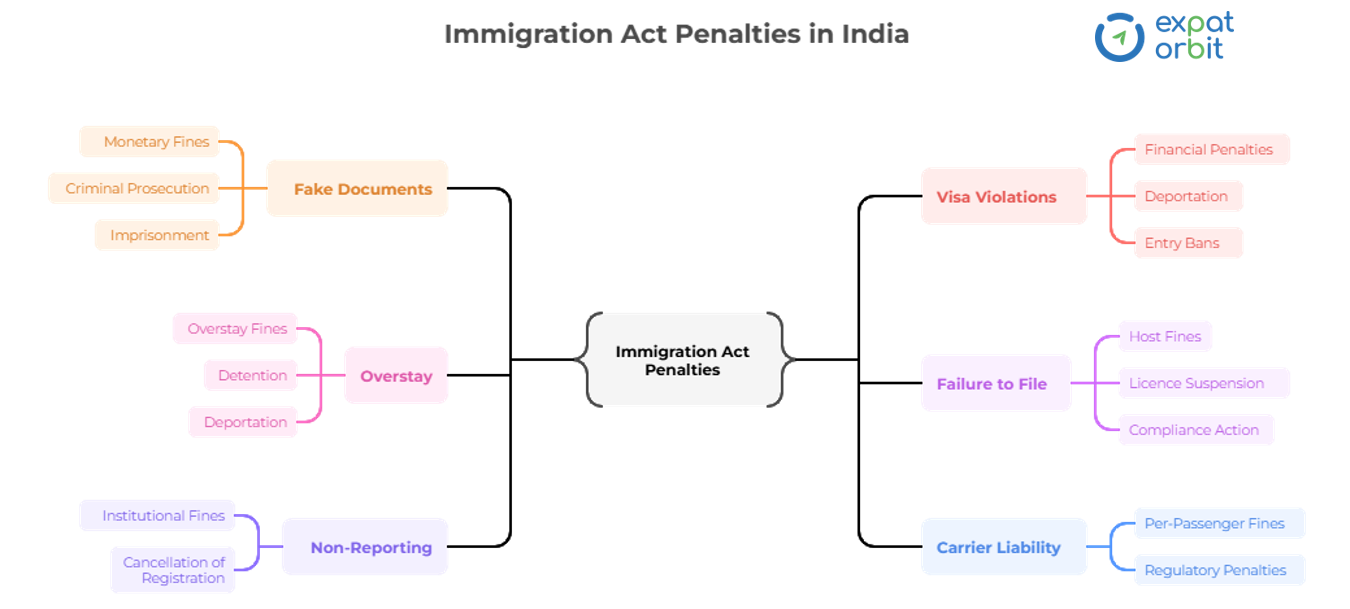
Failure to file Form C (arrival or exit), delays, incorrect entries, or non-submission now fall under Section 23 of the Act 2025, which states that any foreigner-related compliance violation is punishable with imprisonment up to 3 years, fine up to ₹3,00,000, or both.
Under the Immigration and Foreigners Act, 2025, FRRO registration is now fully structured and largely digital for foreigners on long stay visas, including employment, student, research, intern, and medical categories. Registration must be completed within the prescribed timeframe, and profiles must be kept updated for any change in address, employer, course details, or travel plans. The Su Swagatam app enables online filing, appointment booking, document uploads, and real time status tracking, replacing the manual and region based processes under the earlier framework.
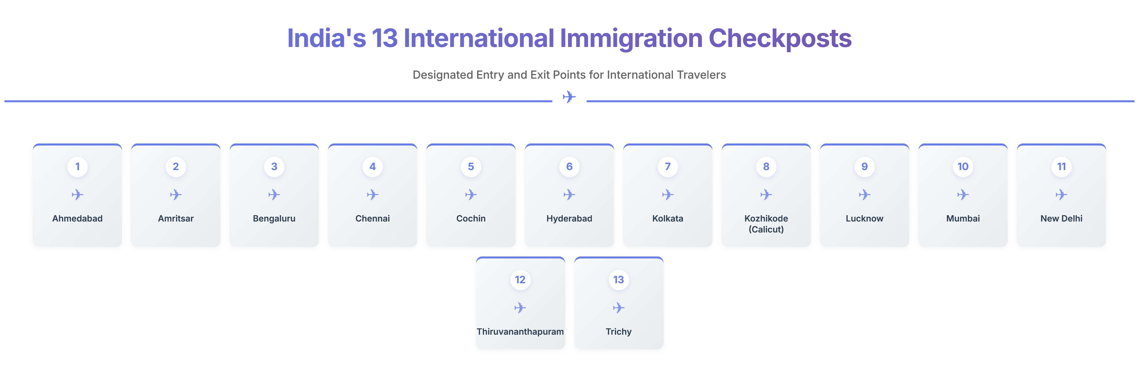
Most services such as registration, extensions, and profile updates are handled online, with physical visits required only for biometrics or original document verification. Foreigners must maintain digital copies of key documents, including passport, visa, Residential Permit, registration certificate, and address proof. To improve coverage and processing speed, new FRROs have been established in Jaipur, Guwahati, and Chandigarh, supported by upgraded international immigration checkposts with biometric capture, digital e arrival validation, and fast track processing.
The act is designed to encourage timely and accurate compliance. While the system is now simpler and more digital, failure to meet basic requirements can still lead to penalties.
What travellers and institutions should keep in mind
The focus of the 2025 Act is not restriction, but prevention of misuse, protection of genuine travellers, and smoother immigration outcomes through early compliance.